






Virtual Reality Simulators for Logistics Training and Efficiency Improvement
Logistics is a complex function that necessitates the use of different types of equipment for a range of functions such…

Tecknotrove’s Forklift Simulator is a material handling training simulator built for institutes, logistics operators, and industrial facilities to deliver safe, scalable operator training without putting real equipment, warehouse staff, or inventory at risk.
As a forklift simulator manufacturer, Tecknotrove supplies vocational training institutes, skill development centers, warehousing and logistics companies, ports, construction sites, and corporate L&D teams with a realistic training tool that replicates true machine dynamics — including instability during tight turns, driving on slopes, and rapid braking under load.
Traditional forklift training ties up real equipment, exposes new operators and site staff to unnecessary risk, and makes it difficult to standardize training quality across sites, shifts, or environments, from indoor warehouse aisles to outdoor construction yards and port terminals.
Institutes and operators also face high costs from equipment damage during training, inconsistent instructor-led outcomes, and limited ability to safely test operators on high-risk scenarios such as blind spots, tight turns, loaded braking, and uneven terrain. Tecknotrove’s forklift simulator addresses these challenges by providing a repeatable, data-tracked training environment. Instructors receive objective performance evaluations, institutes gain scalable training capacity, and operators build confidence before ever touching a real machine.
Available with immersive display options, the simulator is designed for institutions that need to train and certify large volumes of operators consistently across a wide range of real-world operating environments.

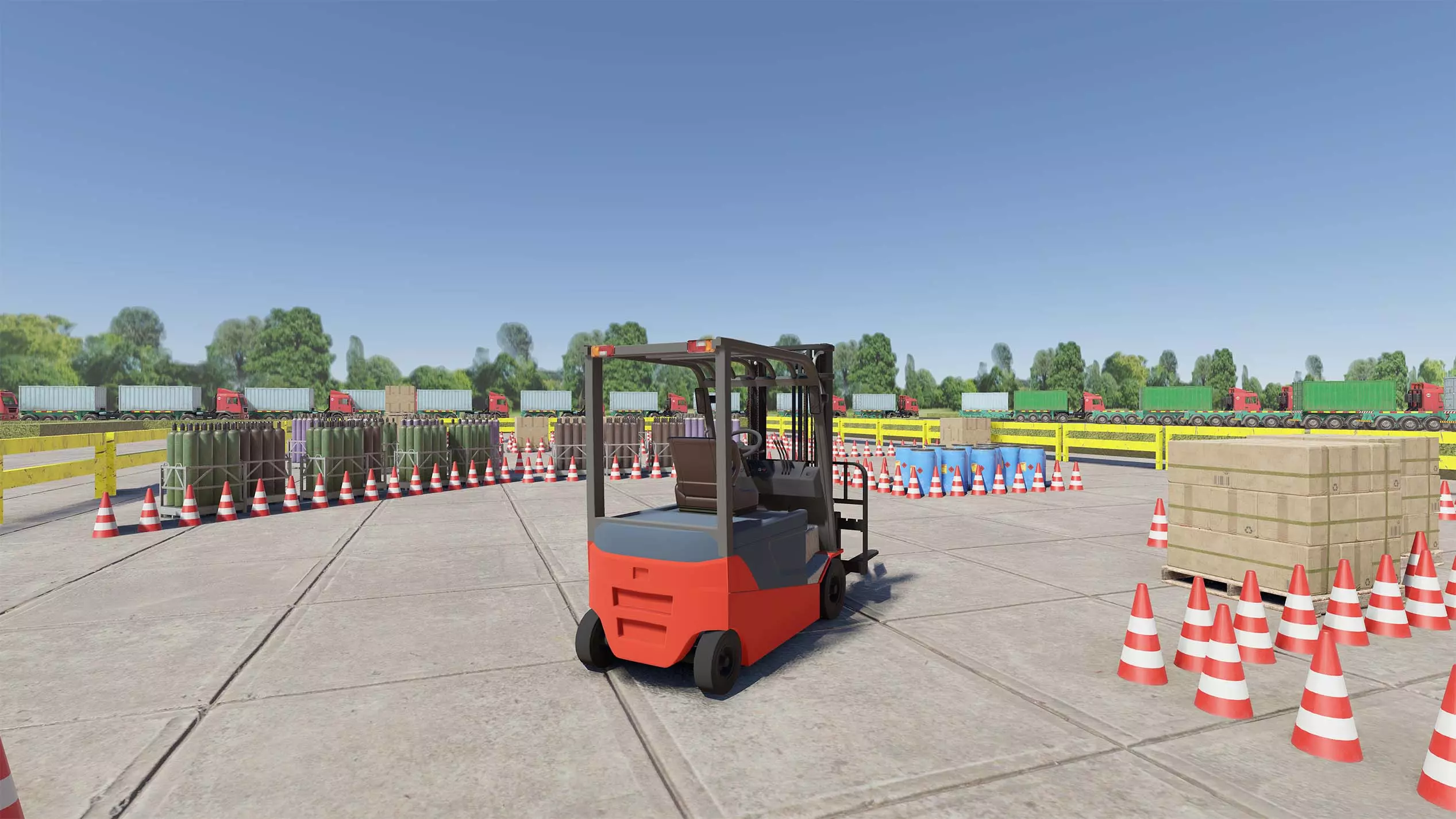
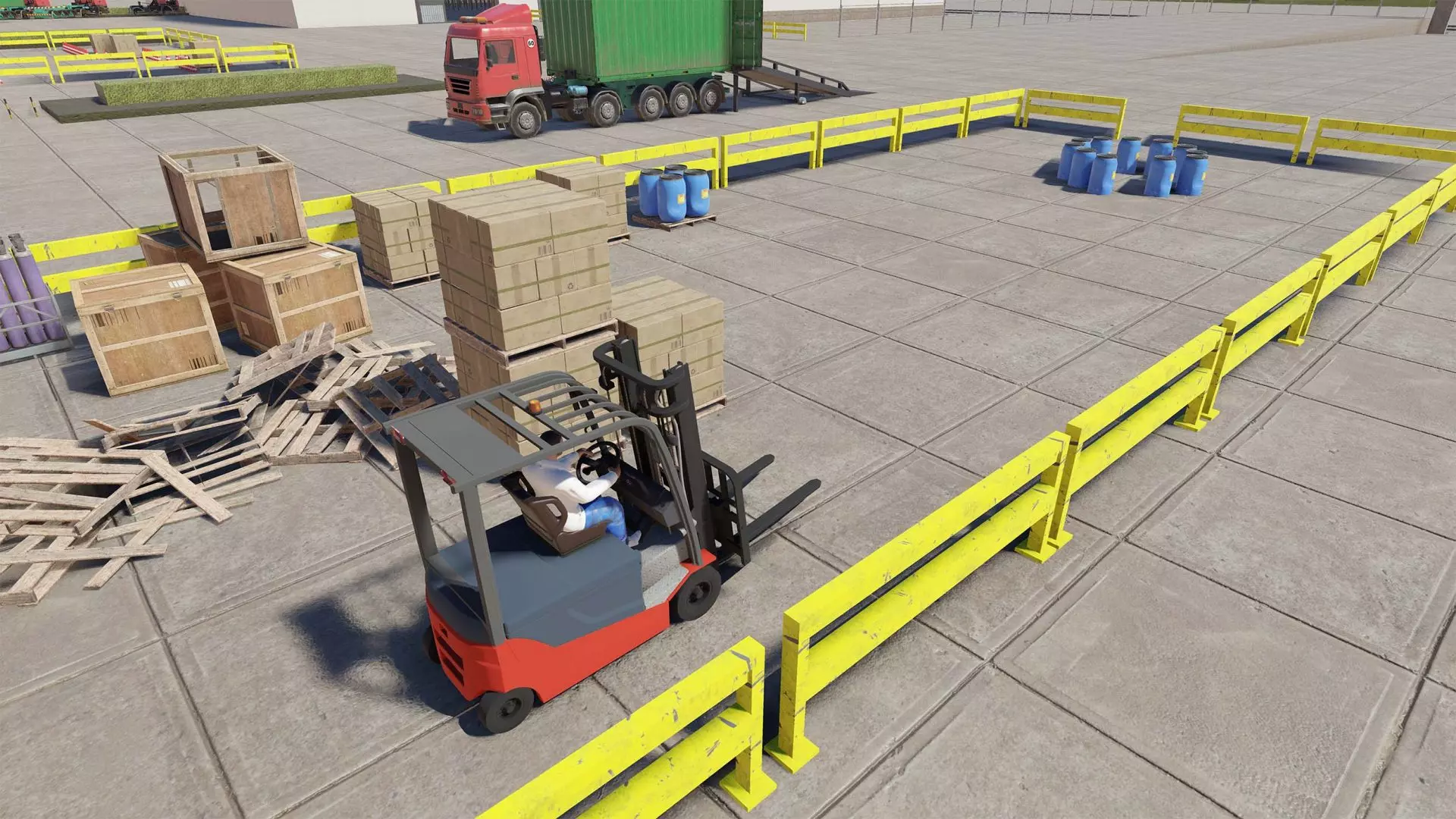
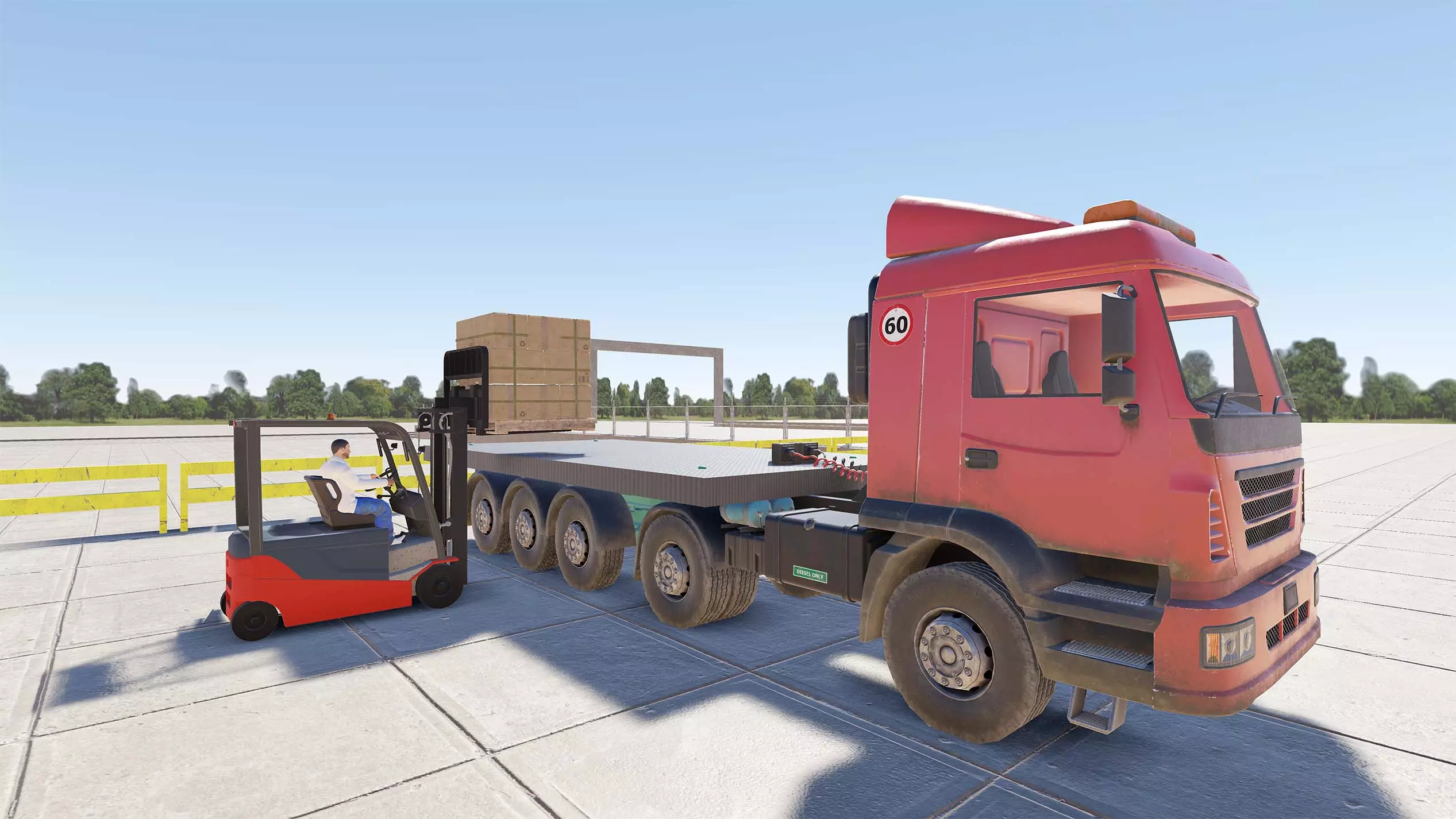
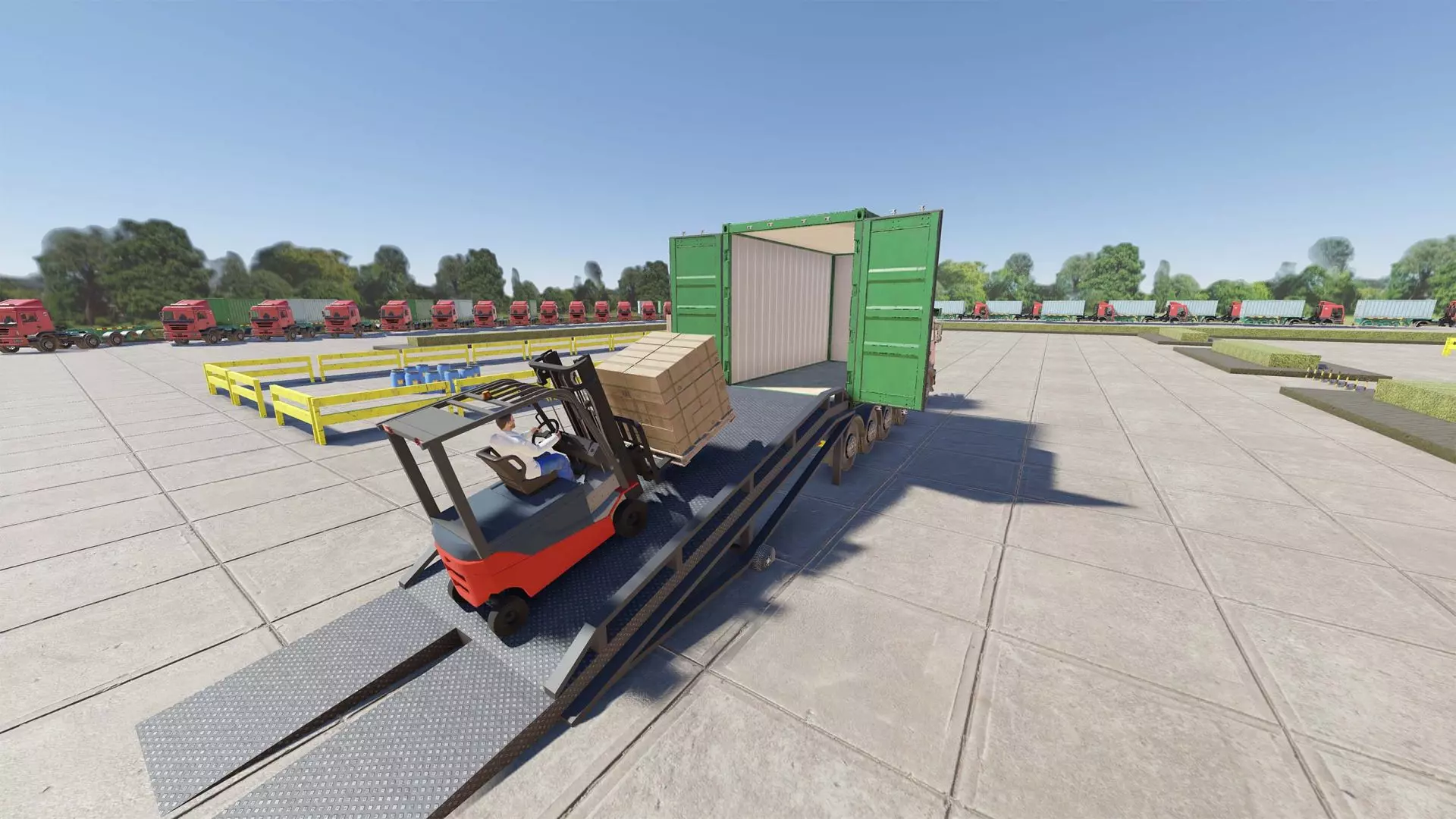
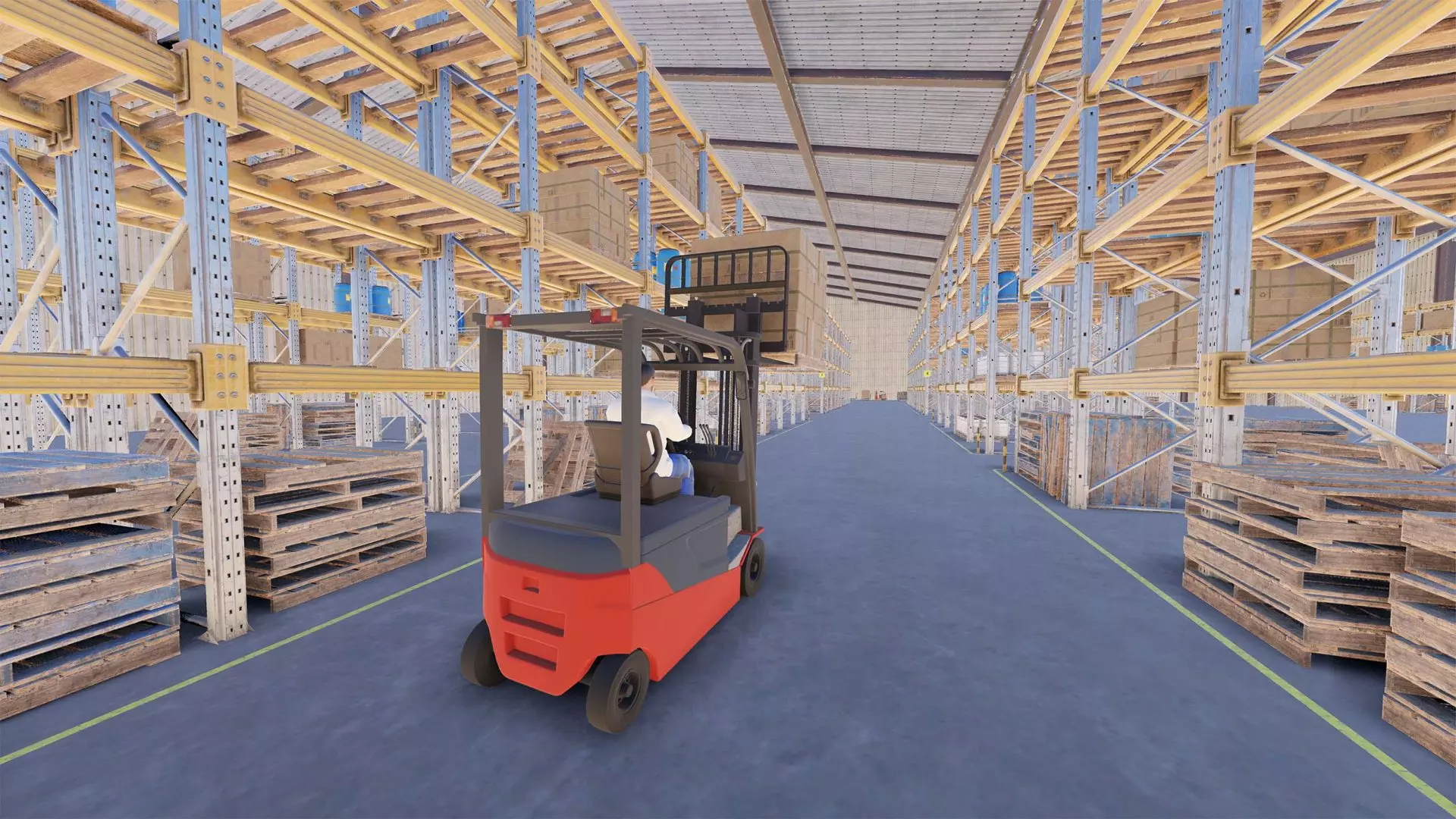
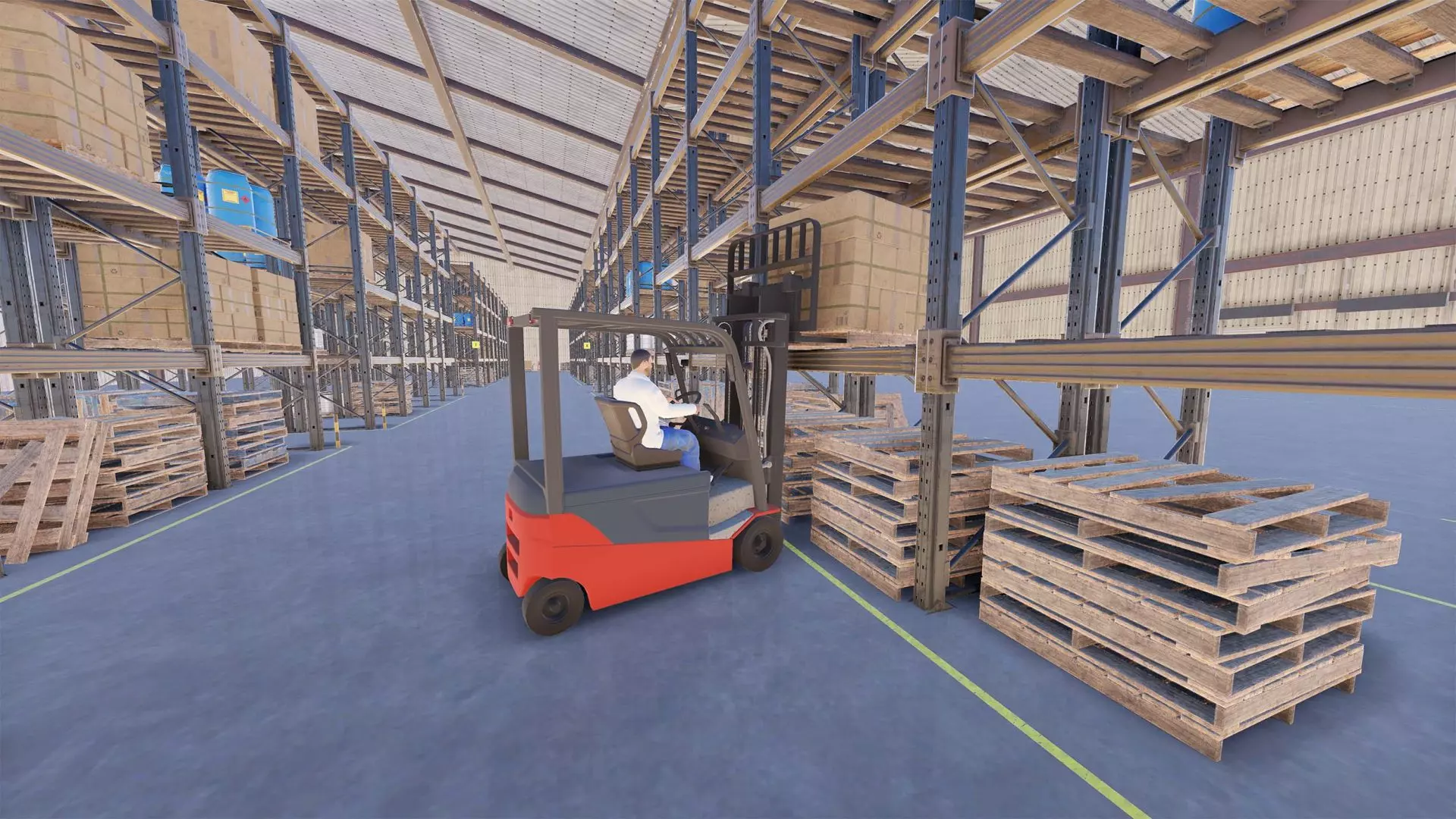
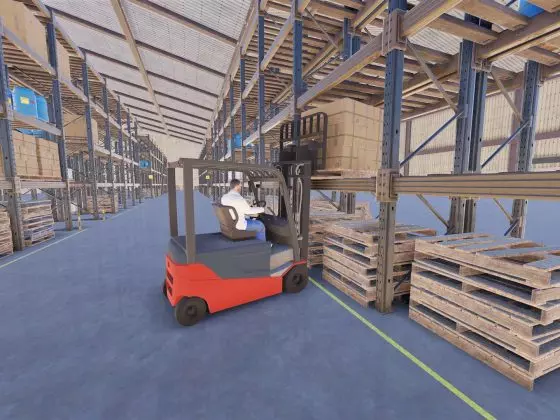
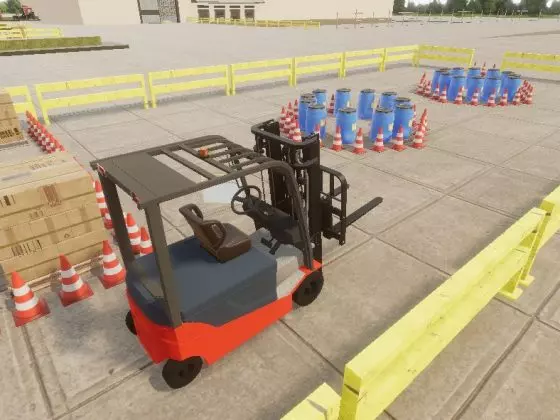
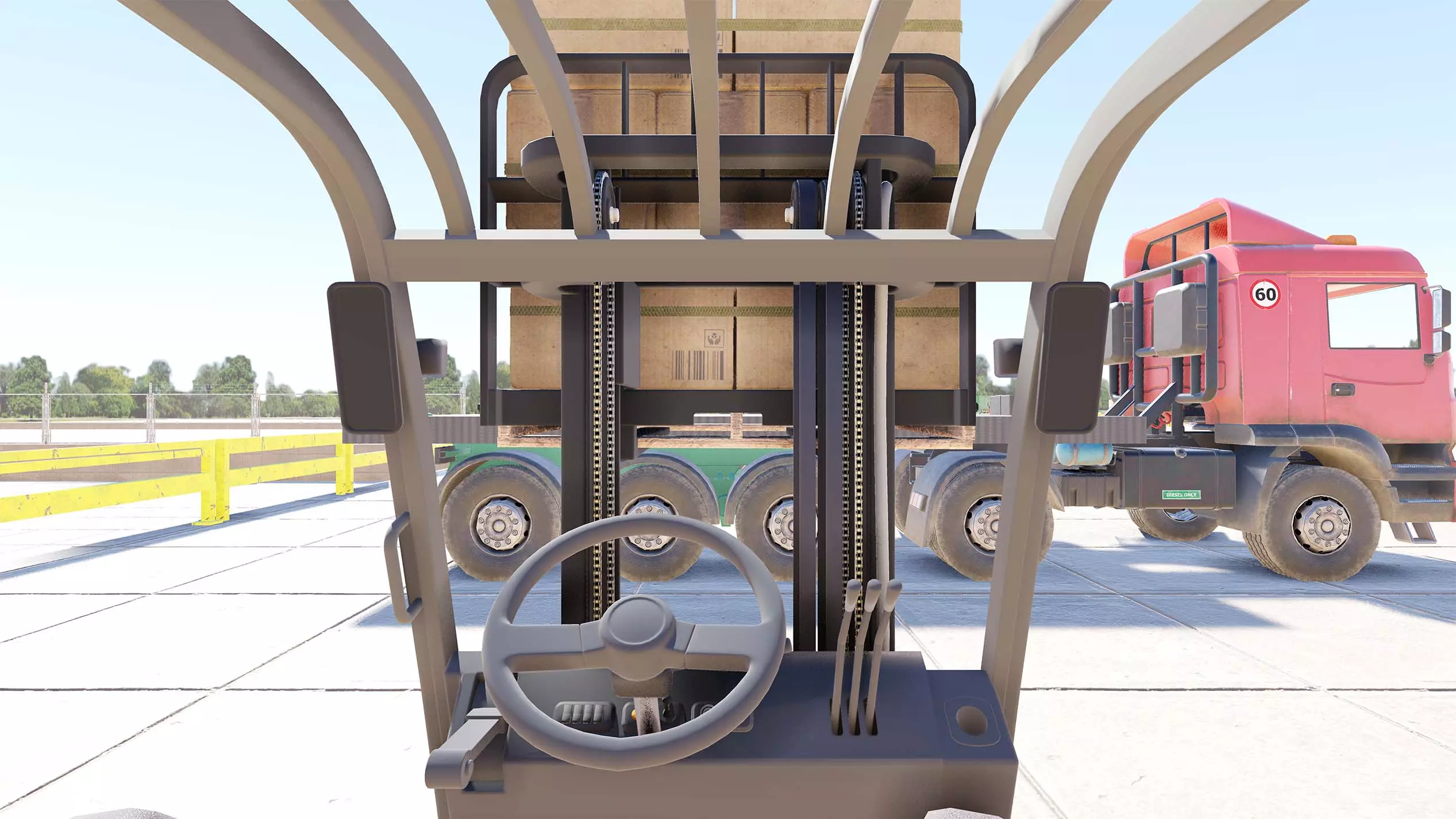
To support operator training and evaluation, TecknoSIM Forklift Simulators feature highly realistic virtual sites. Artificially intelligent movement of workers and other machines at virtual sites helps operators practice in normal and risky conditions. Customized sites can be developed for the clients which simulates actual warehouse, construction sites, manufacturing plant of clients including roads, slopes, staging area, loading bay, parking area & other details.
Forklift operators can train and test using realistic, engaging modules. The training curriculum gradually progresses from basic skills for new operators to advanced operational skills for experienced operators. In training, operators learn various skills, such as maneuvering around objects, handling different loads, and working in confined spaces. In addition, we develop customized scenarios in multiple languages according to the client’s needs. Inbuilt visual and audio cues help the trainee to learn correctly. Standard training module includes :


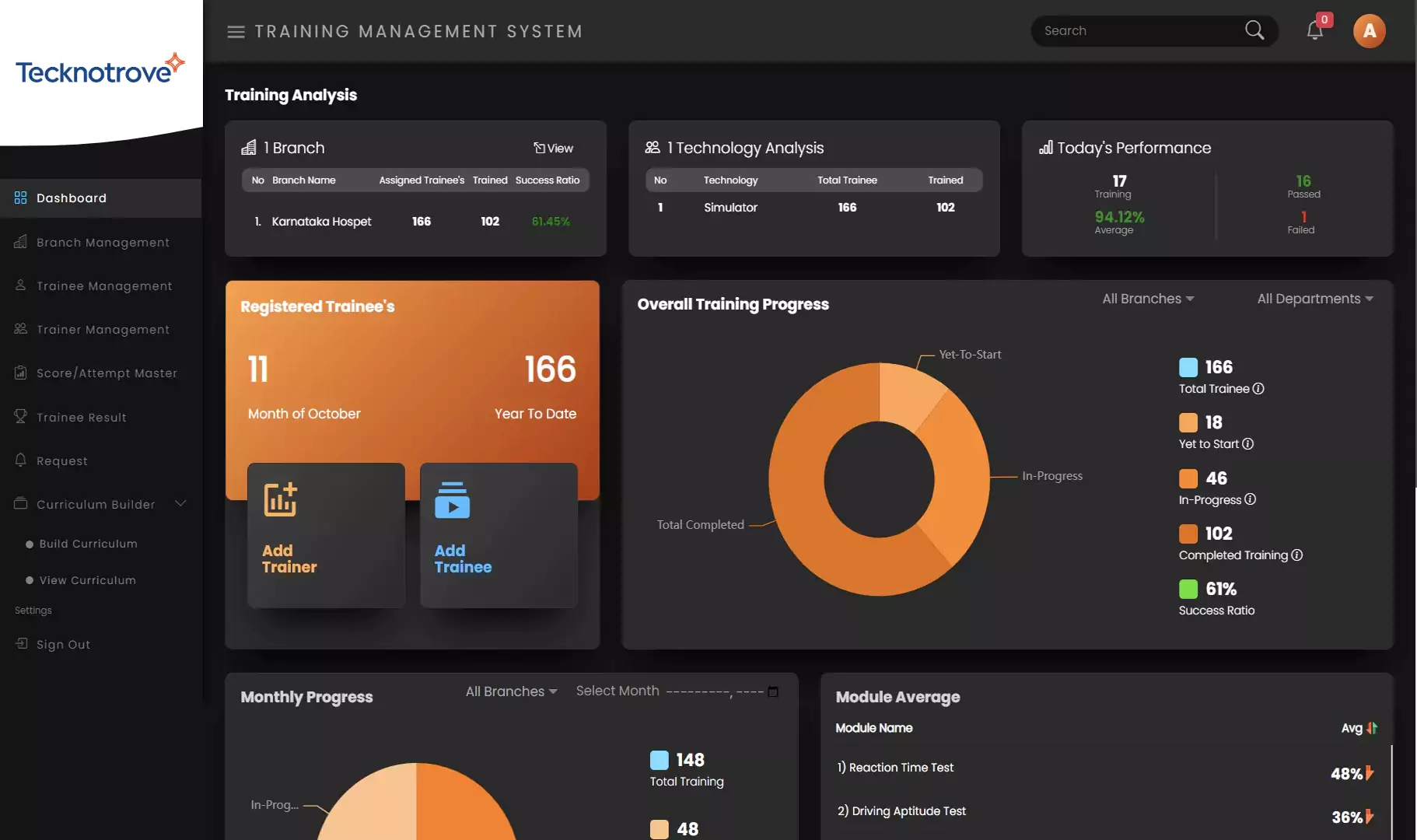
Operators are evaluated in real-time by the simulator on their skill, safety and productivity levels. The simulator generates a detailed evaluation report for each operator at the end of the scenario. As part of the performance parameters, we include session time, driving speed, collisions, loading errors, and unloading errors. Instructors can review scenarios and train operators on their mistakes using the recording and replay feature. During the session, skill gaps were identified and detailed feedback is provided.

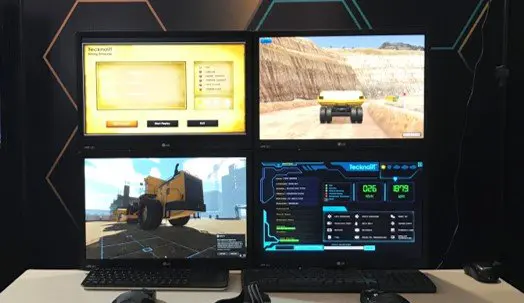
TecknoSIM Instructor Software allows the trainer to control the sessions and maximize simulation training. The software allows the instructor to

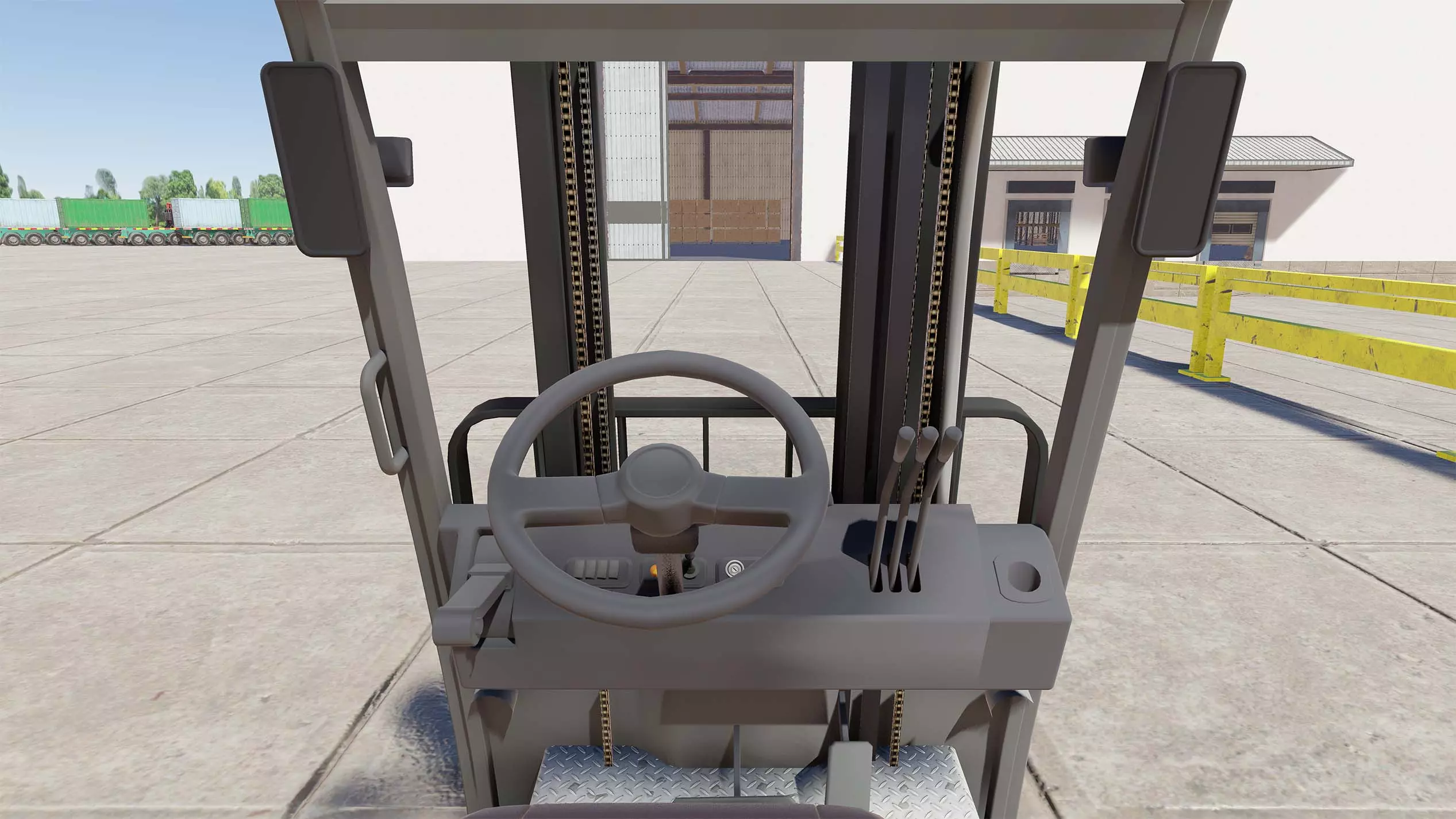
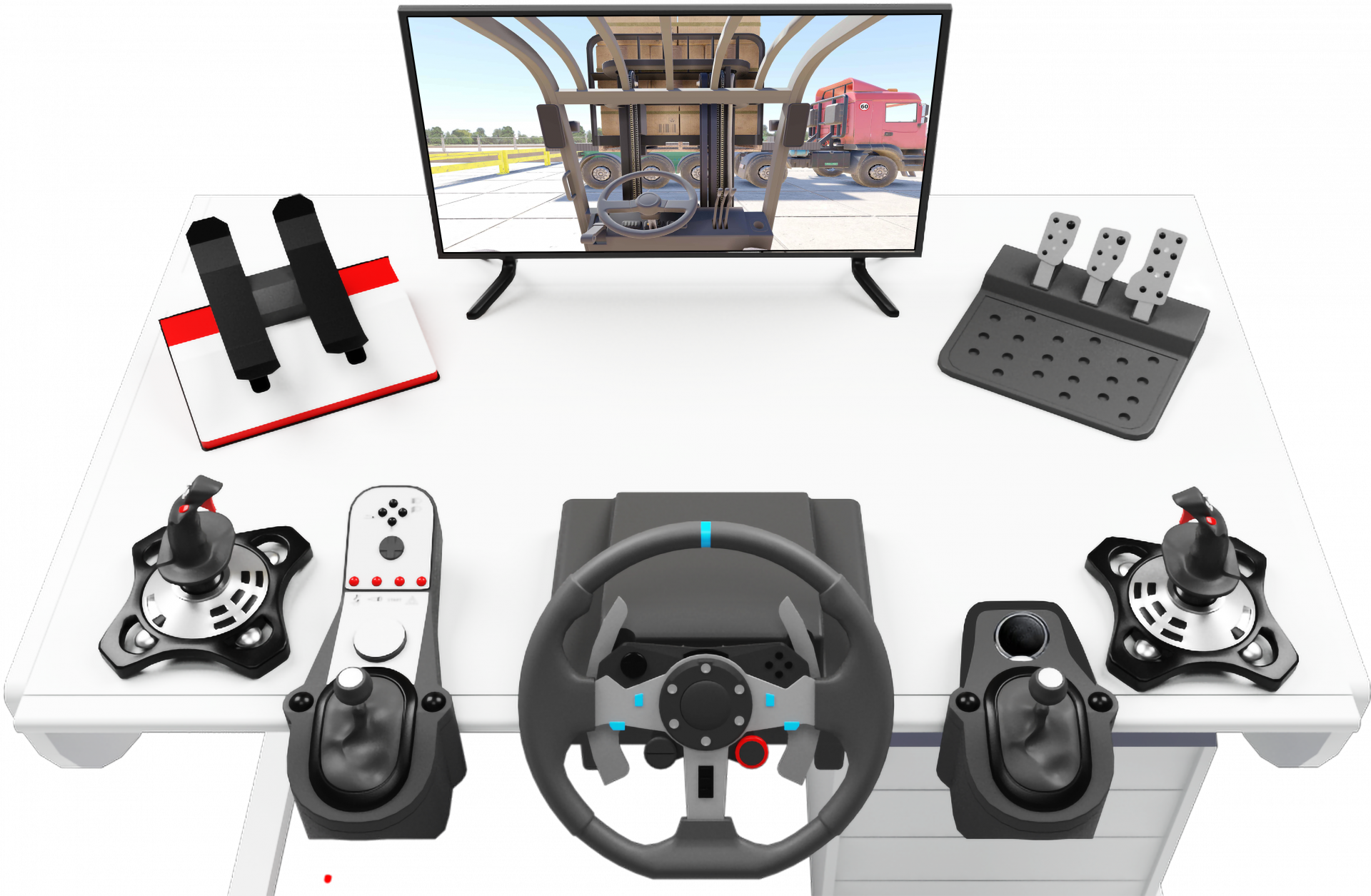
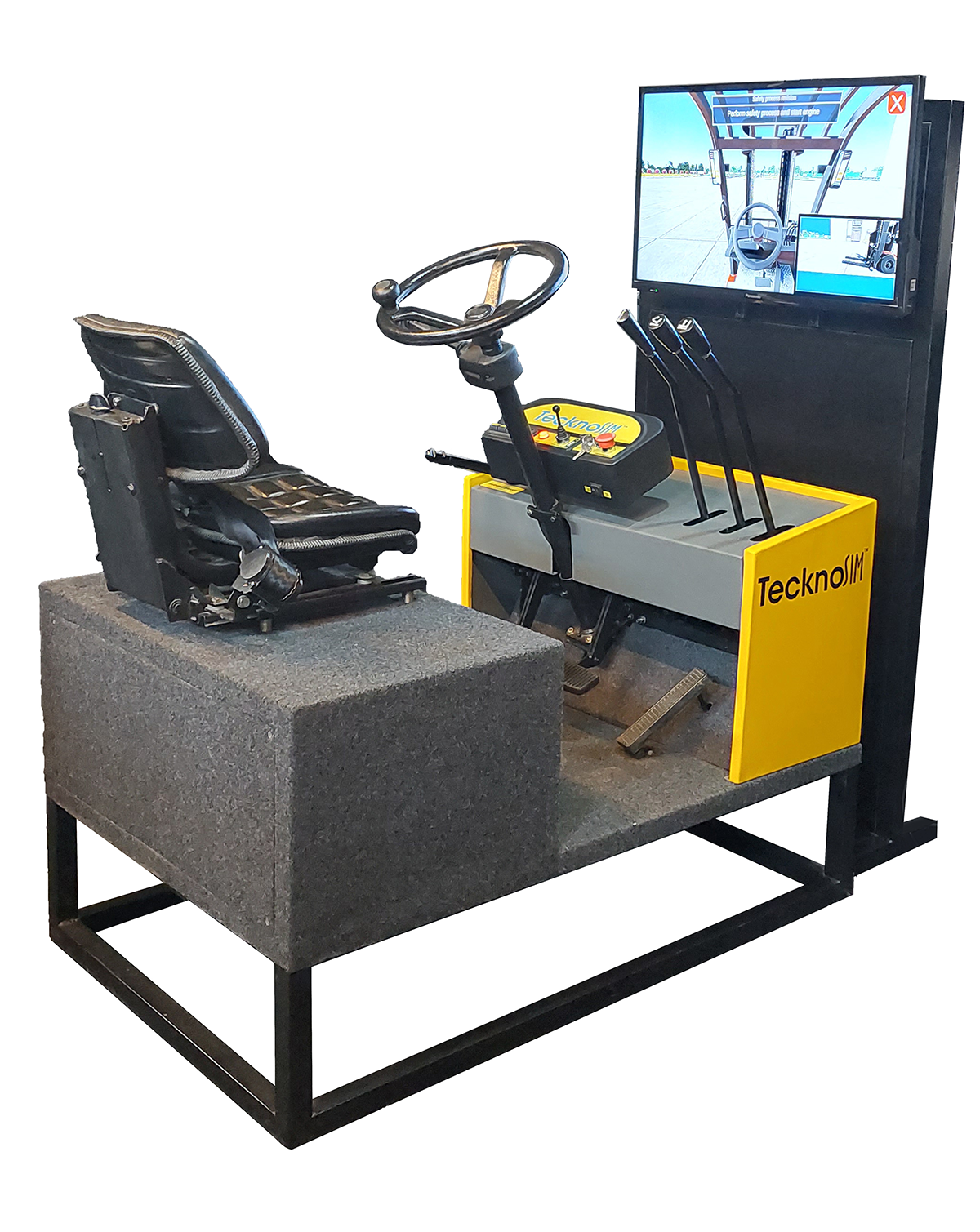
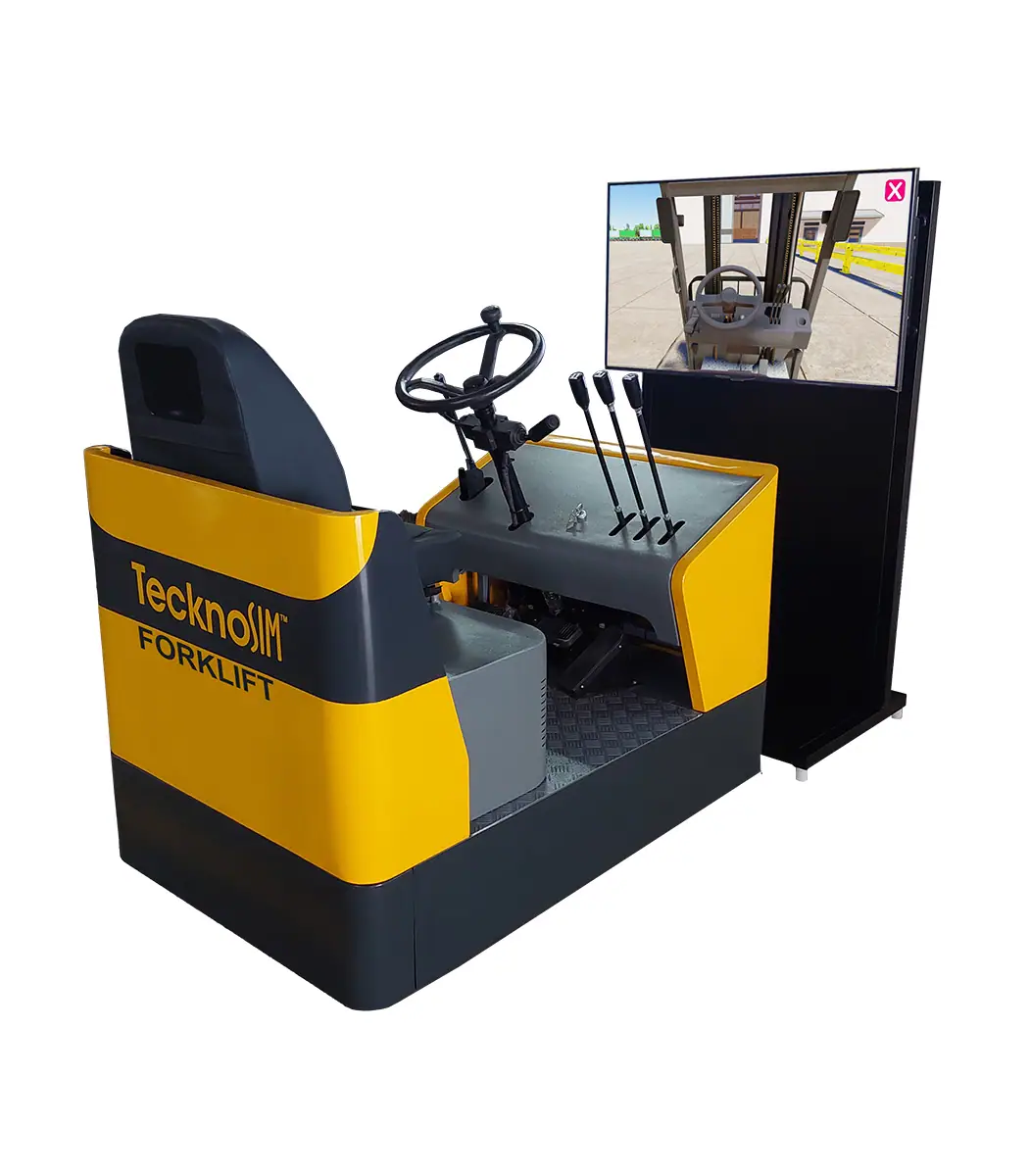
The operator cab of a TecknoSIM forklift simulator is based on a typical sit-down forklift with seating and all equipment controls as seen in actual equipment. Pedals, levers, switches, and the steering wheel are available as controls around the operator’s seat. The station consists of an instrument panel that mimics real controls and instruments in real time. Multi-equipment configurations are possible with convertible kits, and the simulator can be installed into any OEM console.

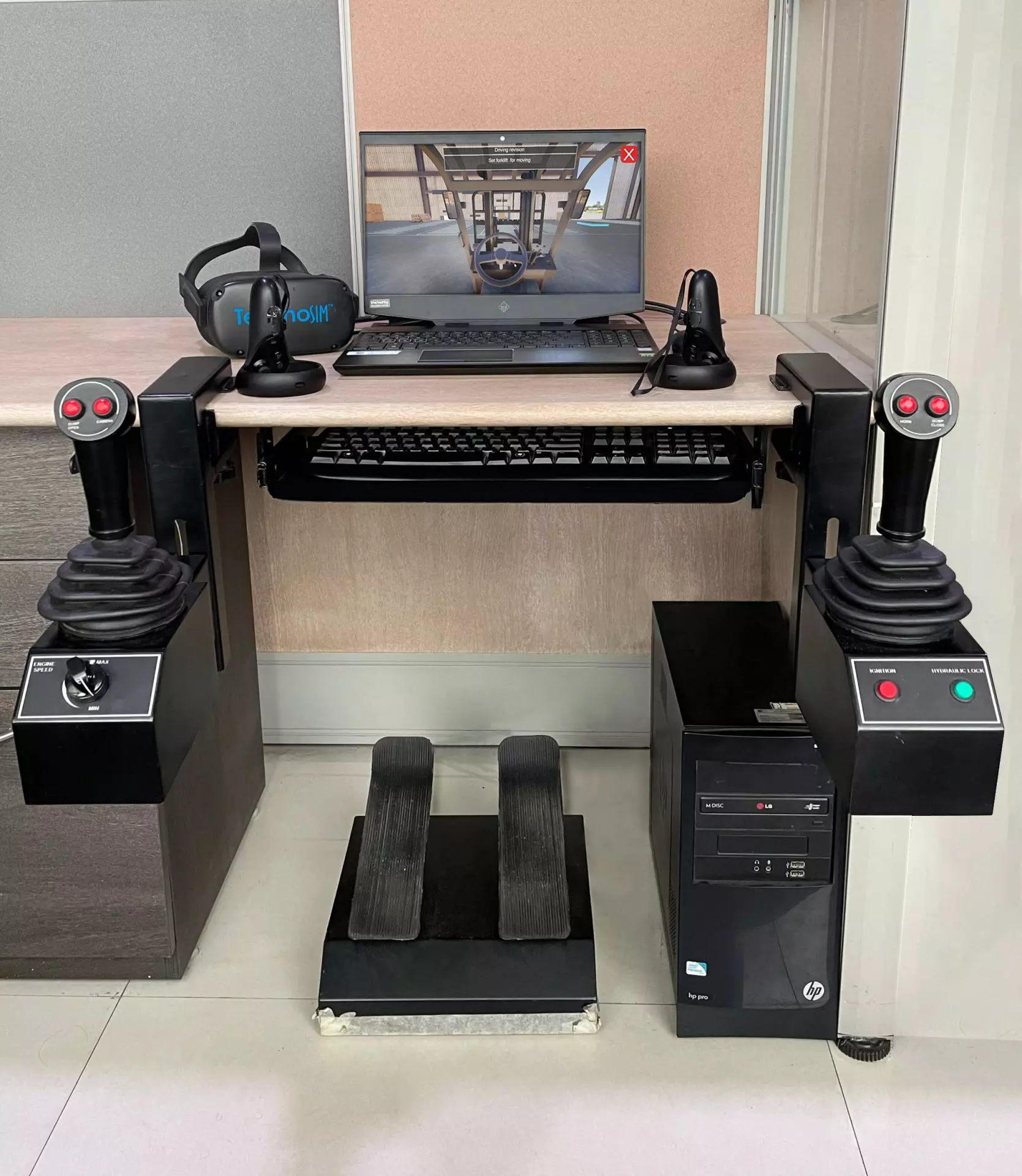
The visual system with high definition graphics is a key component of the training simulator. A properly designed visual system increases the level of realism and immerses the operators in real world operating environments. The display system for TecknoSIM simulators is available in multiple options for single-screen or three LED screens. For the VR Forklift simulator, the display will be through VR headsets. While operating other machines, additional screens are provided for blind spots and rear views.

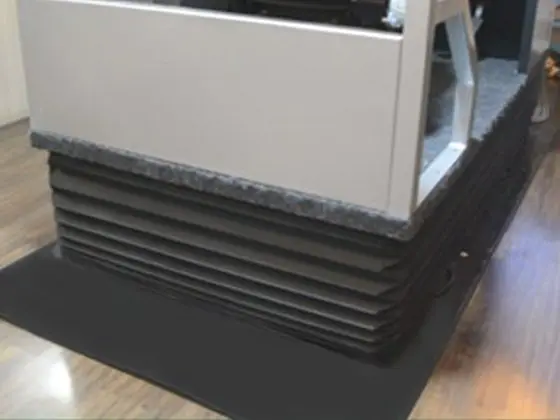
TecknoSIM Simulators offer an integrated motion system based on electric actuators that makes it compact and low on maintenance. The motion system provides accurate feedback required for a realistic operating experience in real world operating environments. As well as steering, acceleration, braking, turning, jerks, gradients, tires, and soil interaction, it can also provide cues and feedback. The Motion System is available on the Three Degrees of Freedom (3DOF) Motion Platform.
Logistics is a complex function that necessitates the use of different types of equipment for a range of functions such…
Tata Steel a leading global steel company committed to safety .With a vision to set long term objective to achieve…
FAQ
Forklift technical training involves structured lessons on equipment operation, maintenance, and safety. Trainees learn about load handling, inspection procedures, and workplace regulations to operate forklifts competently and reduce accidents.
It’s a virtual training tool that mimics forklift operation. Trainees practice lifting, stacking, and maneuvering in realistic scenarios, reducing the risk of accidents and equipment damage before operating an actual forklift.
In many regions, occupational health and safety regulations require formal training and certification. Employers often mandate it to protect employees, meet legal standards, and maintain safe, efficient operations.
Proper training minimizes accidents, lowers equipment damage, and ensures compliance with safety standards. Skilled operators are also more efficient, reducing downtime and improving productivity in warehouses or industrial facilities.
Courses typically cover forklift components, load balancing, hazard recognition, pre-operation checks, and safe driving practices. They may also address workplace layouts, emergency protocols, and specialized operations like working in narrow aisles or on ramps.
It cuts down on equipment wear, minimizes the risk of injuries, and allows for repeated practice of difficult maneuvers. Overall, it leads to safer, more confident operators who can handle real forklifts with greater proficiency.
By providing a realistic yet safe setting, trainees can repeatedly practice complex maneuvers. Real-time feedback helps correct errors early, resulting in better handling, improved safety protocols, and more efficient workplace operations.
They allow learners to handle the equipment in a risk-free environment, offering immediate feedback on mistakes. This reduces the chance of workplace accidents and builds operator confidence before they transition to real-world operations.
Common features include realistic controls, detailed virtual environments, and performance tracking. Advanced setups may have motion feedback and scenario customization, offering comprehensive training for different industrial settings.
Yes. Many companies use simulators as part of their safety and operator training. They help reduce costs, minimize wear on actual equipment, and enhance operator competence by providing a platform for repetitive, realistic practice.