











Tecknotrove Supports TVS’ Commitment to Safety
Tecknotrove has successfully completed a comprehensive simulator project for TVS – India’s third-largest 2 wheeler manufacturer in India and having…
Tecknotrove’s motorcycle training simulator is a professional rider training and evaluation system designed for driving schools, government licensing authorities, OEMs, and fleet operators. It enables structured rider training, skill assessment, and licensing evaluation in a controlled and risk-free environment.
Unlike gaming-oriented bike simulators, this system is purpose-built for institutional training, combining real motorcycle controls with advanced training modules to improve rider safety, standardize testing, and support structured training programs.
The system is available in configurations suitable for both entry-level training setups and advanced training environments, and is designed for professional rider training environments including driving schools, licensing authorities, and fleet training programs.
This motorcycle training simulator is designed for deployment across a wide range of rider training and evaluation environments, including:


TecknoSIM Motorcycle Driving Simulators are used for:

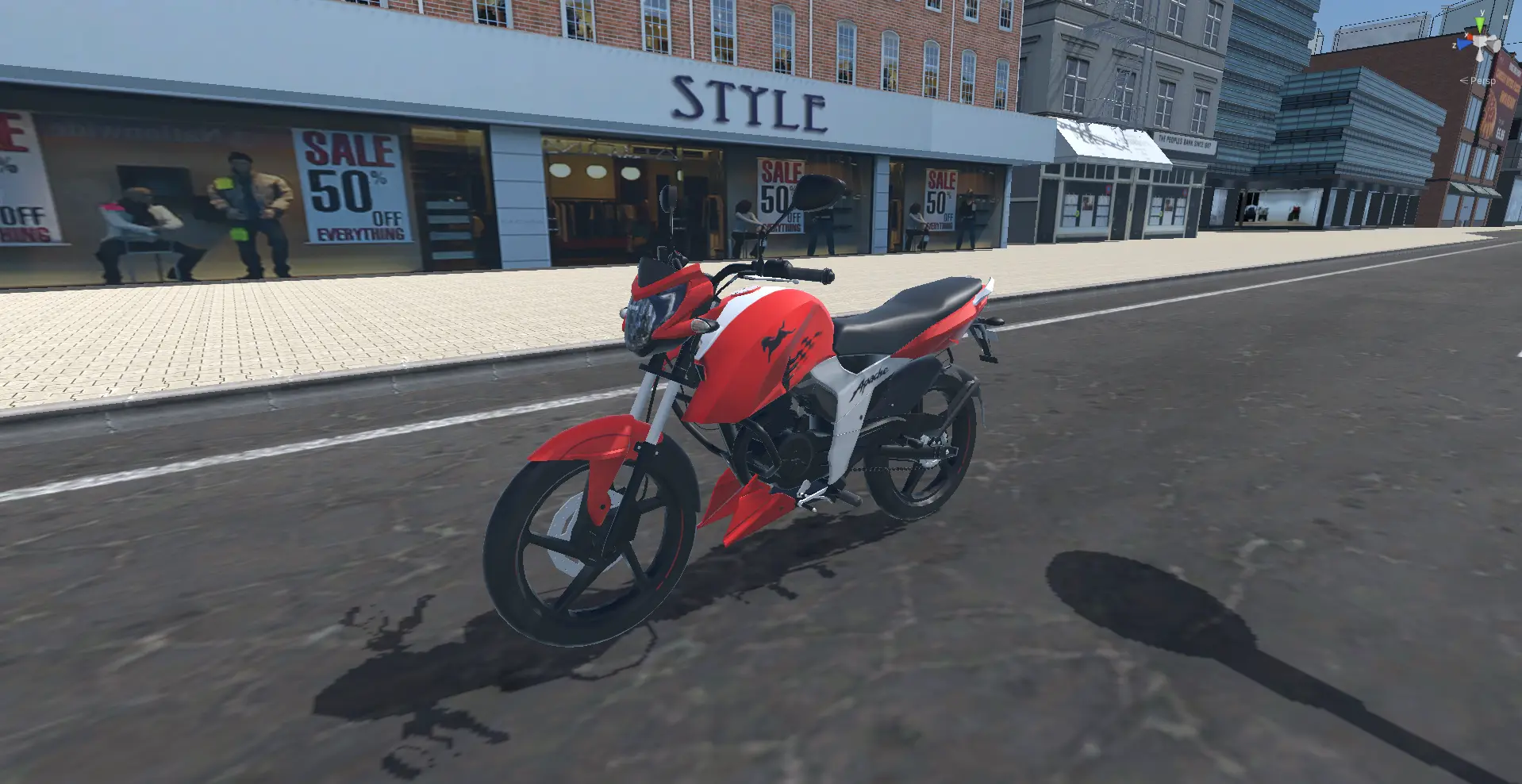
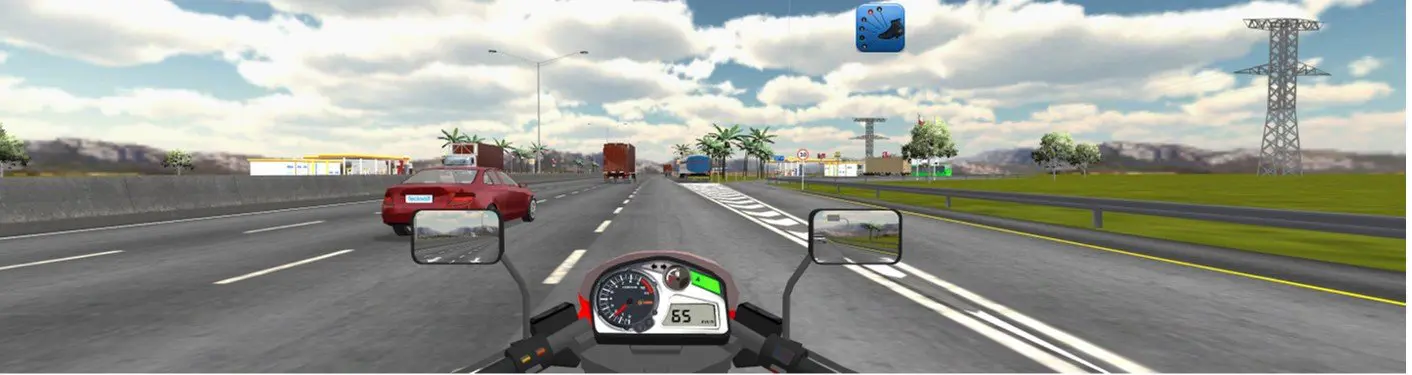
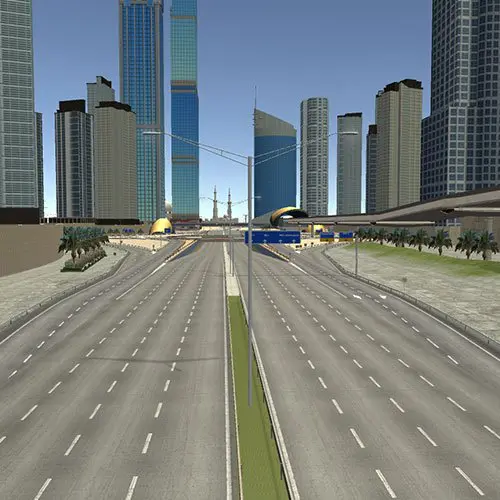
Multiple terrains are available on the simulator for effective training. Riders can train on test tracks, city roads, residential areas, commercial streets, highways, freeways, off-roads, and mountainous routes.
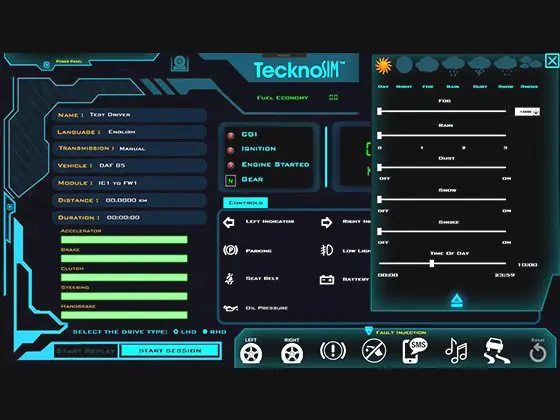
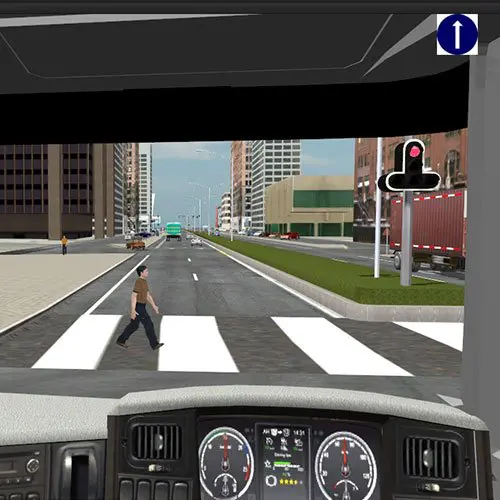
Real-time environmental conditions such as rain, fog, snow, dust, and varying daylight settings enhance training realism. Intelligent traffic systems generate both routine and high-risk scenarios, enabling riders to develop hazard perception and decision-making skills. The simulator also supports standardized testing scenarios such as serpentine tracks used in licensing assessments.

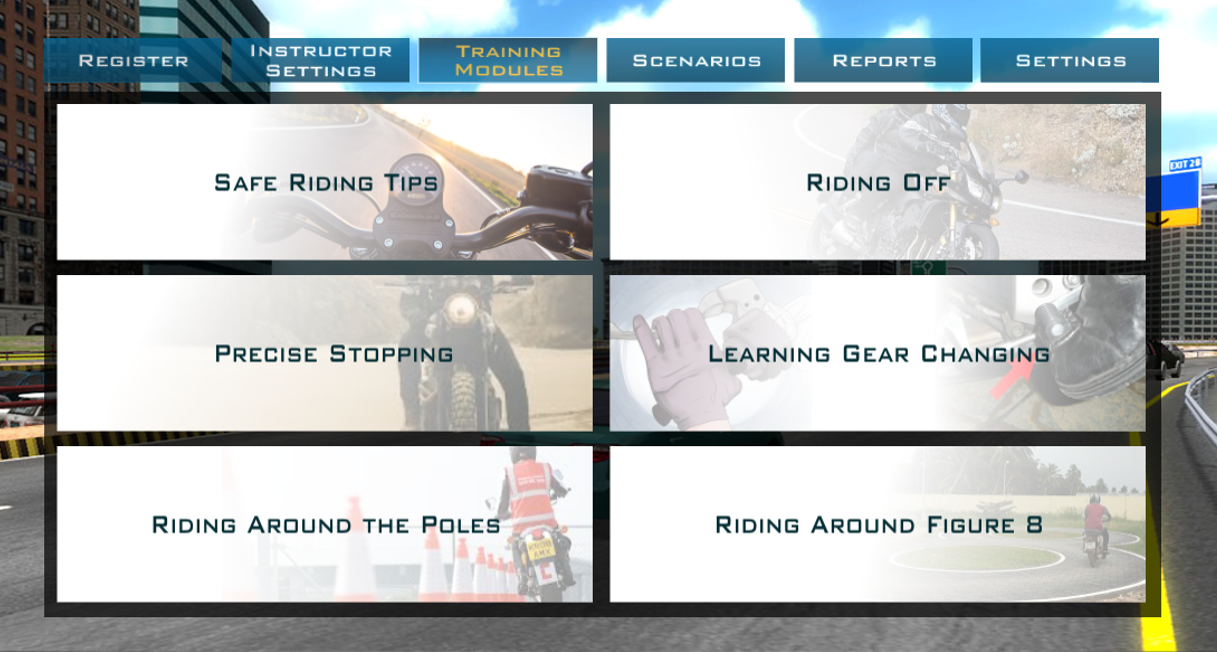
The simulator includes progressive training modules designed for both beginner and advanced riders. These modules cover essential riding skills, defensive driving techniques, and response training for high-risk situations.
Customizable training programs can be developed based on specific organizational requirements, including multi-language support and region-specific road conditions.

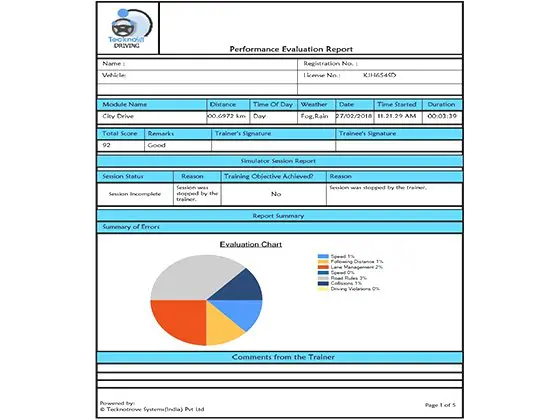
Rider performance is automatically evaluated in real time based on driving behavior, rule compliance, hazard response, and operational control.
The system generates detailed performance reports for each rider, enabling objective assessment. Record-and-replay functionality allows instructors to review sessions, identify errors, and provide targeted feedback for improvement.

The instructor software provides complete control over training operations. Instructors can register riders, assign training modules, and configure specific scenarios.
Dynamic event injection, such as sudden obstacles or mechanical faults, allows simulation of critical situations. Real-time monitoring and advanced reporting tools help optimize training effectiveness and track rider progress.
The system supports structured training workflows aligned with institutional training standards.

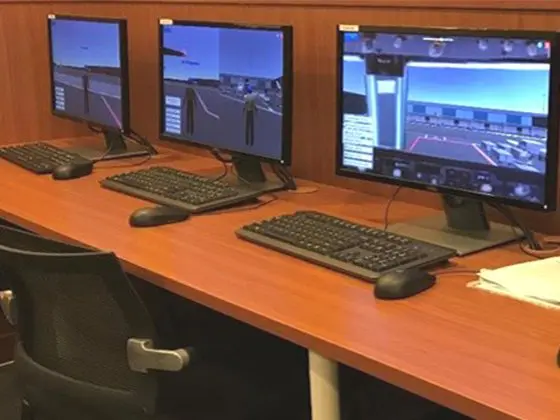
Multiple simulators can be connected to a central instructor station, enabling simultaneous training of multiple riders. This setup is ideal for large-scale training programs and institutional deployments requiring consistency and efficiency.
Enables efficient large-scale training delivery across multiple riders simultaneously.

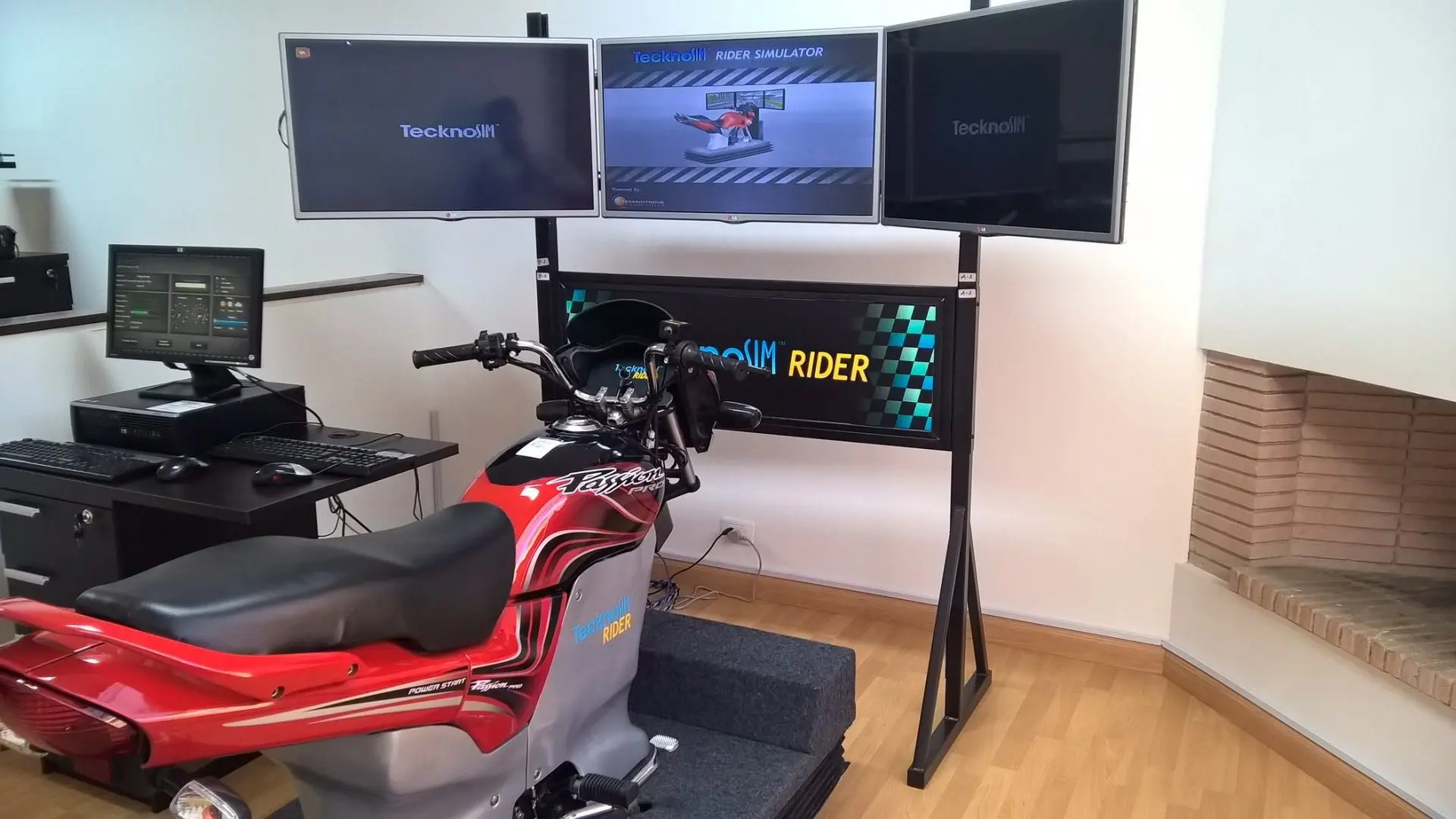
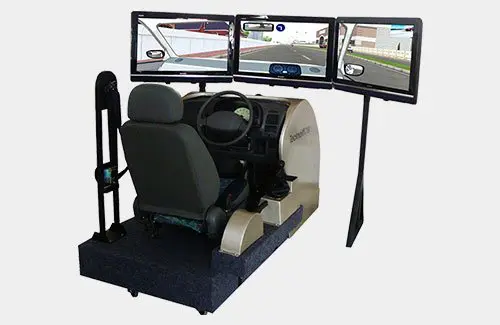
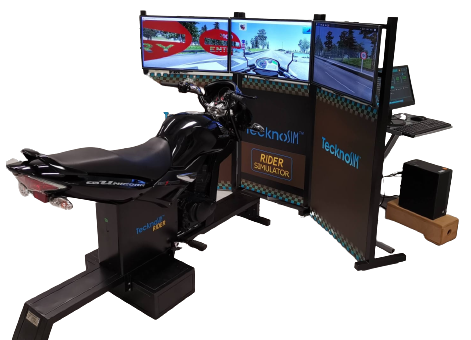
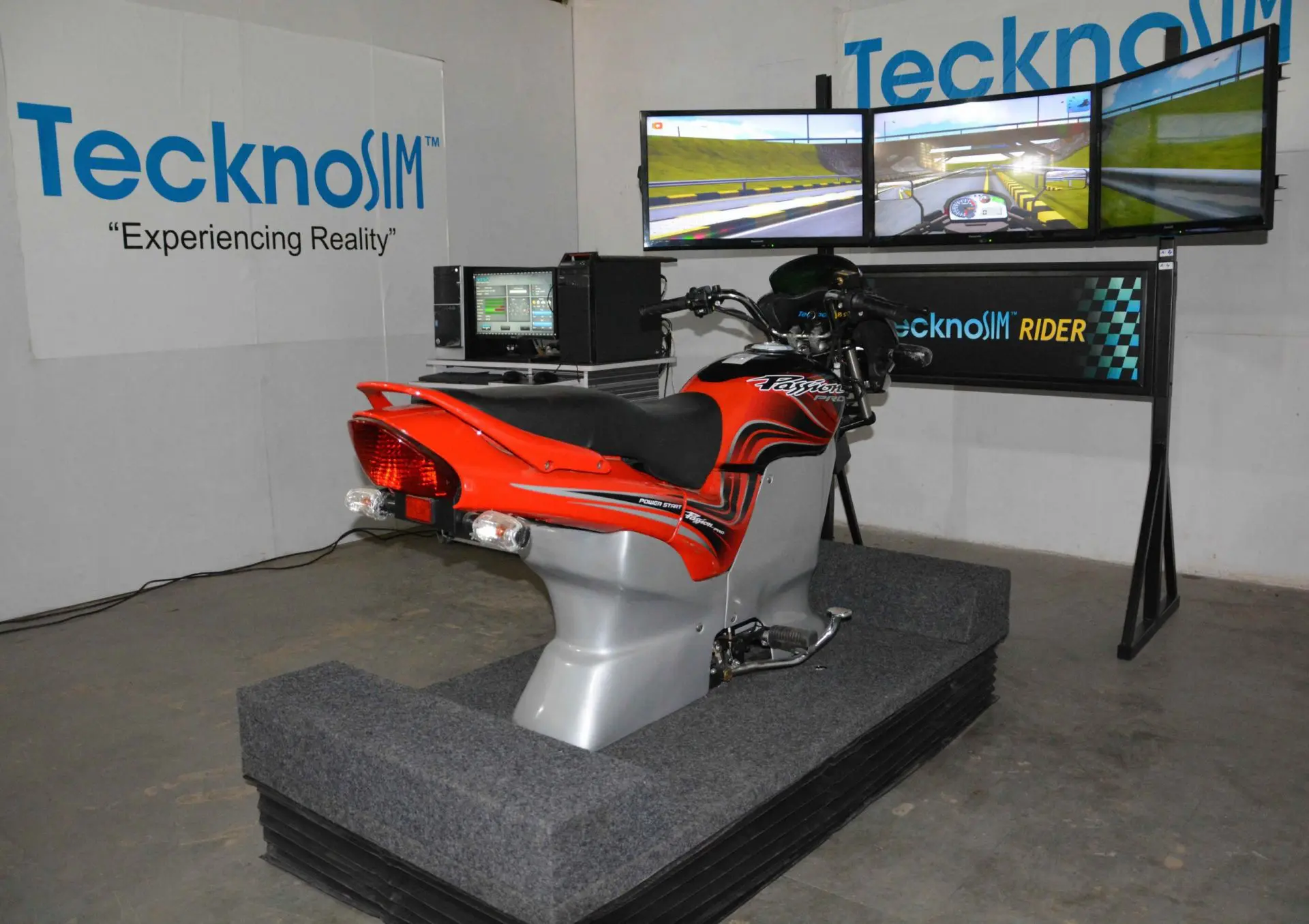
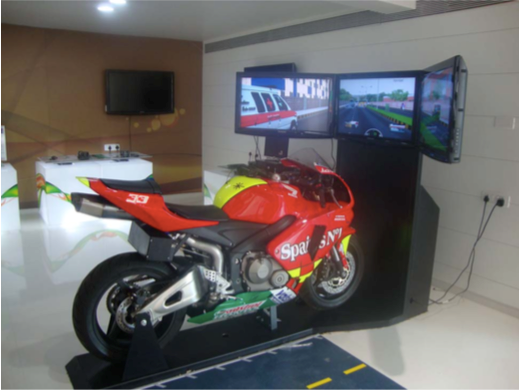
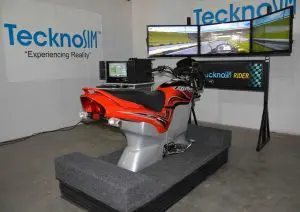
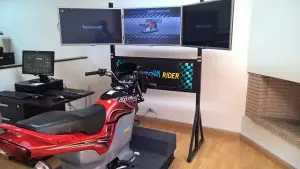
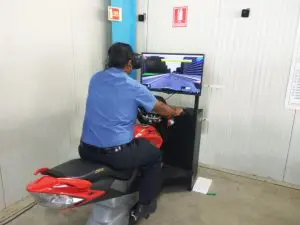
The simulator features a real motorcycle body mounted on a robust frame, equipped with standard controls including brake, clutch, accelerator, switches, and ignition.
This realistic control setup ensures accurate skill transfer from simulator training to real-world riding. The system is available in both geared and automatic configurations to support different training requirements.

Training scenarios are displayed on three large LED screens, providing up to 180° field of view for an immersive training environment.
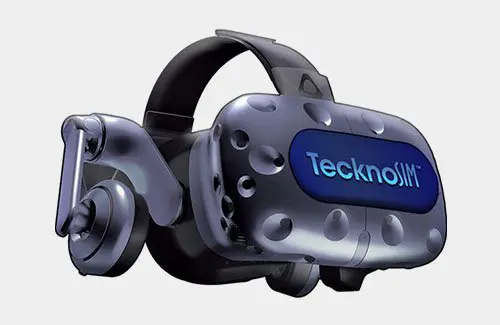
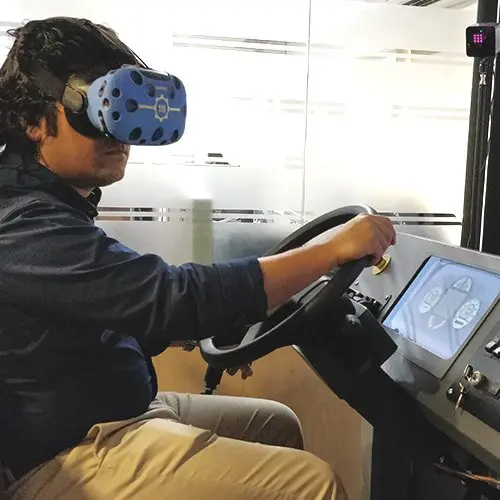
The display integrates rearview mirror simulation and supports VR compatibility, enabling enhanced situational awareness and realistic rider perception during training.

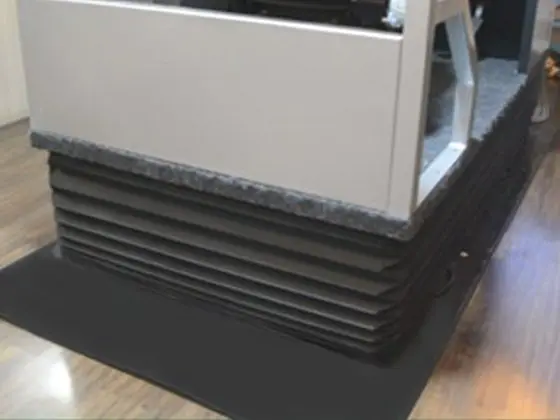
The simulator can be integrated with 3DOF or 6DOF motion platforms to replicate real riding dynamics.
The motion system delivers feedback for acceleration, braking, road conditions, and directional changes, helping riders develop balance, control, and response accuracy in a safe environment.

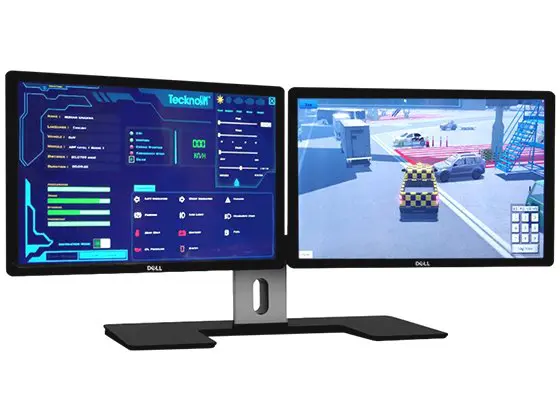
The instructor station enables full operational control over the training process.
It allows configuration of training scenarios, real-time monitoring of rider performance, and detailed post-session analysis. The system supports performance tracking, error identification, and customized training workflows tailored to different rider skill levels and institutional requirements.
Tecknotrove has successfully completed a comprehensive simulator project for TVS – India’s third-largest 2 wheeler manufacturer in India and having…
The Govt of Bangladesh is taking serious measures to curb the increasing number of road fatalities in the country .Driving…
FAQ
A motorcycle simulator is a virtual training tool that recreates real-road riding conditions. Users learn clutch control, balance, and maneuvering skills in a safe environment that closely mirrors actual motorcycle dynamics.
Modern simulators use advanced graphics, force feedback, and motion platforms to closely mimic real-road conditions. They provide a safe and cost-effective way to learn and refine essential motorcycle handling skills.
A bike simulator recreates riding conditions using sensors, a realistic bike frame or handlebars, and immersive visuals. Users experience road scenarios, traffic patterns, and environmental factors. This setup allows them to practice defensive driving, maneuvering through different climate and road conditions, ensuring driver safety.
Costs vary widely based on hardware and training software requested. In mature markets, there are several manufacturers who offer an economical range with multiple features. The typical range runs between $4,000 and $7,000. It is best advised to do a demo before buying a bike simulator to know what you are getting.
They offer a low-risk environment for practicing fundamental skills and emergency maneuvers. Immediate feedback allows beginners to refine their technique without the danger of on-road traffic or weather conditions.
They’re highly effective for teaching foundational skills—like clutch control, balance, and hazard awareness—before hitting real roads. Simulators provide instant feedback in a safe environment, helping riders build confidence and muscle memory without the risks of traffic or adverse weather.
Benefits include reduced accident risk during the learning phase, cost savings on fuel and bike maintenance, and consistent practice scenarios. Instructors can also replay mistakes and guide learners through corrective measures, speeding up the learning process.
Yes. Many simulators feature traffic simulations, variable weather, and diverse road conditions. While they can’t replicate every real-world factor, they expose learners to common hazards and traffic patterns, improving their situational awareness.
Look for realism, hardware quality, software features, and after-sales support. Advanced systems offer motion platforms, VR integration, and customizable scenarios. Also, consider your budget, the level of detail needed, and whether you require analytics or performance tracking.
Bike simulators are realistic and immersive training solutions used extensively by law enforcement worldwide for driver training. It is the latest state-of-the-art training solution that is safe, immersive, and realistic. Training on simulators allows you to learn how to ride a motorcycle with confidence in a safe environment and acquire life-saving skills like defensive driving and riding in different weather conditions.
Typical features include realistic handlebars, adjustable resistance, immersive graphics, and performance tracking. Advanced models may incorporate VR or motion feedback for a more authentic riding experience.
Yes. Experienced riders can practice advanced techniques, explore unfamiliar terrains, or train for competitive events. Simulators provide scenario variety without the risks of real-world riding, supporting continuous skill development.