
The pace of infrastructure development in the United Arab Emirates has compressed the margin for training error. Airports, highways, ports, and urban expansions are advancing in parallel, often under fixed delivery timelines and heightened safety scrutiny. In this environment, operator readiness is no longer a downstream concern. It is a prerequisite for project continuity.
Traditional learning methods struggle to meet this demand. On-site exposure is slow, asset-intensive, and risk-prone, particularly during early skill acquisition. Classroom instruction alone cannot prepare operators for real-world decision-making under environmental stress, equipment variability, and site constraints.
Simulation-based training addresses this gap by relocating skill development away from live sites. Operators can practice, fail, and refine techniques within controlled environments that replicate real operating conditions. The result is faster skill acquisition without exposing people, equipment, or schedules to avoidable risk.
For large-scale UAE projects, this approach reframes training from a time-bound activity into a productivity enabler. Operators arrive on site prepared, not supervised into readiness.
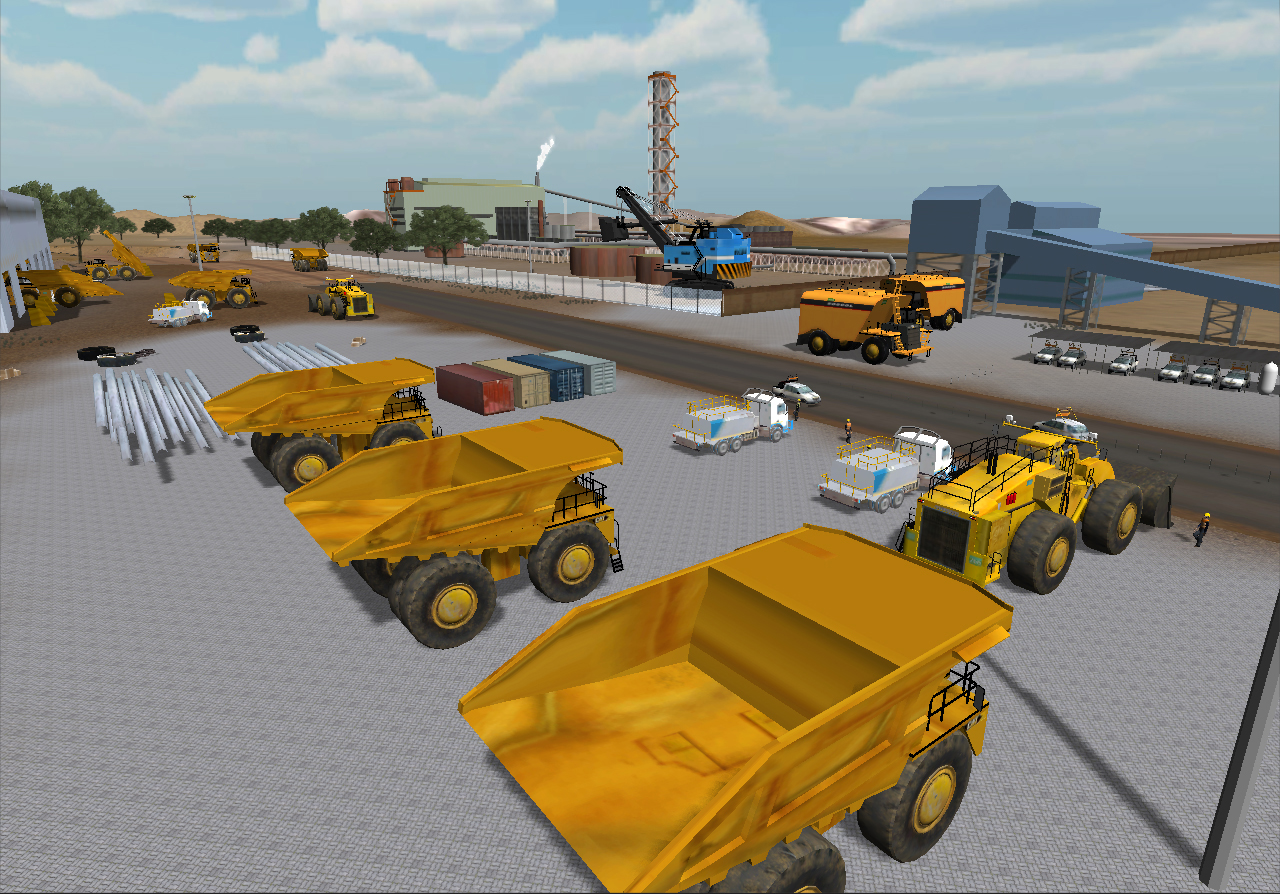
In practice, this shift is already visible across heavy-equipment training programs. For organizations assessing how simulation translates into real heavy-equipment readiness, Tecknotrove’s work in mining simulators for large-scale operator training illustrates how off-site skill development is deployed across high-risk, asset-intensive environments.
Why Traditional Operator Training Slows Skill Development?
Live equipment training competes directly with production. Every hour allocated to learning reduces asset availability, increases fuel consumption, and exposes expensive machinery to beginner error. At scale, these inefficiencies compound across fleets and projects.
More critically, traditional methods limit repetition. High-risk scenarios such as confined operations, low-visibility work, or emergency responses cannot be safely practiced multiple times on active sites. Skill development becomes uneven, instructor-dependent, and difficult to verify objectively.
Simulation removes these constraints by allowing unlimited repetition under standardized conditions. This accelerates muscle memory development and decision confidence, particularly for complex or infrequent tasks.
How Simulation Supports Traditional Operator Skill Development
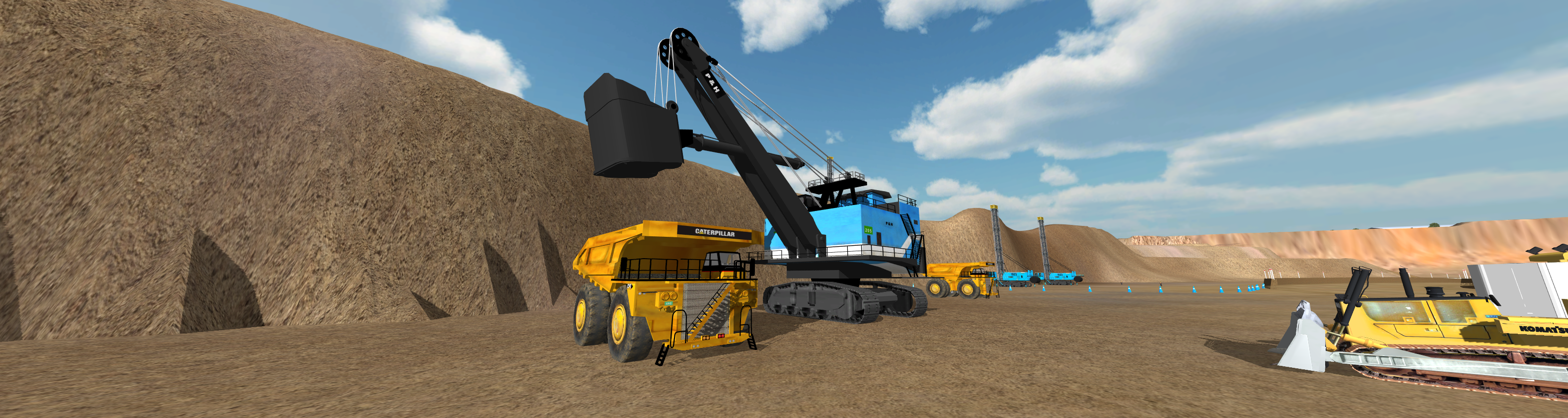
Simulation environments replicate equipment behavior, terrain response, and worksite constraints with high fidelity. Operators progress through structured scenarios, starting from foundational controls and advancing toward precision tasks and emergency handling.
Because learning occurs off-site, operators can train intensively without interrupting production schedules. Performance data captured during sessions enables targeted correction rather than generic retraining.
Training outcome comparison
| Training Dimension | Traditional Approach | Simulation-Based Training |
|---|---|---|
| Practice frequency | Limited by site risk and asset availability | Scalable, risk-free training |
| Skill verification | Instructor observation subject to human error | Data-driven performance metrics for detailed individual analytics |
| Error cost | High (equipment, delays) | None |
| Readiness at deployment | Variable skills | Standardized skills |
This structure shortens the time between onboarding and productive contribution, particularly for operators new to complex equipment.
Preparing Operators for Real-World UAE Operating Conditions
Skill transfer is only effective when training reflects actual site realities. UAE projects introduce unique variables including extreme heat, abrasive sand, dense urban interfaces, and mixed-experience crews.
Simulation scenarios can be configured to reflect these factors directly. Operators learn how environmental stress affects machine behavior, visibility, fatigue, and response time before encountering those conditions on site.
These localization challenges are explored further in our UAE-focused overview on mining and construction simulators in the UAE , which details how heat, sand, urban constraints, and regional worksite conditions influence operator training and readiness.
Common UAE conditions addressed through simulation
| Operating Condition | Training Focus | Operational Outcome |
|---|---|---|
| High temperatures | Fatigue management, machine limits | Reduced overheating incidents |
| Sand and dust | Low-visibility operation | Improved hazard anticipation |
| Urban congestion | Spatial awareness | Fewer near-miss events |
| Mixed-experience crews | Standardized procedures | Consistent operating practices |
This contextual alignment ensures that faster skill development does not come at the expense of safety or compliance.
Measuring Competency and Sustaining Improvement
Accelerated training must still be defensible. Simulation platforms generate objective performance records, tracking reaction time, control precision, procedural compliance, and error patterns across sessions.
These records support informed deployment decisions, refresher training triggers, and audit readiness. Over time, aggregated data highlights systemic skill gaps, enabling organizations to refine training priorities rather than relying on incident-driven corrections.
Skill development becomes continuous rather than episodic.
Role of Simulation Providers in Workforce Readiness
Delivering accelerated, compliant training requires more than technology alone. It depends on domain expertise, scenario design, instructor enablement, and localization for regulatory and environmental realities.
Tecknotrove has applied simulation-based training across high-risk sectors for over two decades, including infrastructure and heavy equipment operations. Its systems are designed to support faster operator readiness while maintaining safety, standardization, and regulatory alignment across large, distributed projects.
In the UAE context, this positions simulation not as a learning aid, but as workforce infrastructure.
Conclusion
Faster operator skill development is no longer optional in the UAE’s infrastructure environment. It is essential for protecting schedules, assets, and lives under compressed delivery timelines.
Simulation-based training enables organizations to shorten learning curves without increasing operational risk. By shifting skill acquisition off-site and grounding it in realistic, repeatable scenarios, projects gain operators who are ready on day one, not supervised into readiness.
As infrastructure complexity increases, training systems must evolve accordingly. Simulation offers a scalable, defensible path forward.