On 25 August 2026, the Directorate General of Mines Safety (DGMS) issued Circular No. 01 of 2026, laying out detailed guidelines for how every mine in India (coal, metalliferous, and oil) must prepare its employee training scheme. The circular gives effect to Rule 157 of the Occupational Safety, Health and Working Conditions (Central) Rules, 2026, which came into force on 8 May 2026 under the OSHWC Code, 2020.
For mine owners, agents, and managers, this isn’t a minor administrative update. It sets out, in specific numbers, how much mining safety training every category of worker must receive before and during employment, and it places significant responsibility on mine owners, agents, and managers to ensure that training is properly planned, delivered, assessed, and documented, either directly or through the training arrangements provided for under the rules.
The Scale of Mining Safety Training Now Required
The guidelines specify initial and refresher mine safety training durations by mine category:
- Aboveground: 12 days initial, 2.5 days refresher
- Opencast (Coal & Metalliferous): 18 days initial, 3.5 days refresher
- Underground (Coal & Metalliferous): 24 days initial, 5.5 days refresher
- Underground gassy coal mines (Degree II/III): 30 days initial, 5.5 days refresher
- Onshore oil mines: 24 days initial, 5.5 days refresher
- Offshore oil mines: 30 days initial, 5.5 days refresher
On top of this, the circular mandates special training (not less than three days) before introducing new equipment or technology, similar three-day-minimum training after a long absence, an accident, or a change of job, and a formal assessment at the end of every training course, with at least two additional days of training required where a trainee scores below 40%, followed by re-evaluation.
Except where exempted under Rule 160, training under the scheme is to take place during normal working hours on a full-day release system, with detailed records (attendance, training logs, evaluation scores, certificates issued, and staff appointments) retained for the entire duration of an employee’s service plus a minimum of five years, and subject to periodic auditing.
Where Mining Simulator Training Fits
Buried inside the circular’s Trade/Discipline-specific module (Part III) for nearly every mine category (opencast, underground, onshore oil, offshore oil) is the same line: “Simulator training wherever applicable.” It sits alongside operation and maintenance training for dumpers, excavators, drills, cranes, loaders, drill rigs, and workover rigs.
That’s a meaningful signal for mine operators planning training for HEMM operators. Delivering 12 to 30 days of structured, assessable training per employee, across categories like HEMM operators, drill/workover rig operators, and blasting crew, without taking that many production hours or that much heavy machinery out of service, is a genuine operational challenge. A mining simulator addresses exactly this gap:
- Training without taking production equipment out of service. A dumper simulator or excavator simulator training session can be run without removing an active dumper, excavator, or other production machine from operations.
- Safe exposure to high-risk scenarios. Blast warning signals, inrush of water, highwall instability, and emergency cutout mechanisms (the circular’s own list of hazards) can be practiced without real-world consequence.
- Built-in assessment and record-keeping. The circular requires scored evaluation and long-term retention of training records. A simulator platform that logs session data, completion status, and scores directly supports Rule 157(3) and the record-keeping requirements in Section 5.0.
- Standardization across categories. The same modules (pre-start checklists, brake testing, steering, emergency cutout mechanisms) repeat across opencast, underground, and oil mine categories. Simulator content can be built once and reused across trade-specific modules for multiple mine types.
- Consistent refresher cycles. With refresher training now mandated every cycle at 2.5 to 5.5 days depending on category, a simulator-based training program makes repeat training far more scalable than re-running full classroom-and-field sessions each time.
How Tecknotrove Mining Simulators can help mines train operators as per DGMS
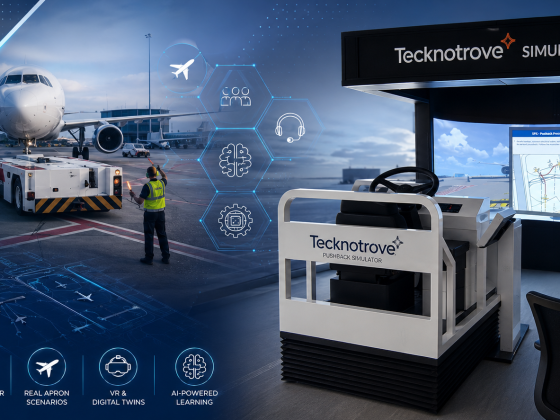
Tecknotrove designs and manufactures mining safety training simulators for mining and construction equipment including dumper simulators, excavator simulators, dozers, drill rigs, and other HEMM covered directly under the DGMS trade-specific modules. A few things matter here for mine operators working through their new training scheme obligations:
- Category-aligned training content. Modules can be mapped to the same categories DGMS uses (opencast, underground, gassy coal, onshore and offshore oil) rather than generic equipment training.
- India-based manufacturing and support. Tecknotrove simulators are manufactured locally in India and supplied globally. Tecknotrove has a strong service support network and customization capability for Indian mine operators navigating a new domestic regulatory requirement.
- A simulator platform that can be aligned with the regulatory framework. Structuring training content, on-the-job training records, and refresher cycles around DGMS’s specific rule references (Rules 157 through 163) is more straightforward when the training content itself is built around the same trade and category structure the circular uses.
For mine operators now building out training schemes under this circular, simulators aren’t a replacement for the field and classroom components DGMS requires, but they’re a way to strengthen the mine specific and, where applicable, practical/on-the-job portions of training more consistently, more safely, and with the assessment and record trail the rules demand. The circular’s own inclusion of simulator training within trade and discipline specific modules (across aboveground, opencast, underground, and both onshore and offshore oil categories) makes the technology particularly relevant to safety in mining, where operators need to build repeatable, assessable training around high-risk equipment without relying exclusively on live-machine hours.
Explore the complete Training Simulator Range for Mining & Construction